

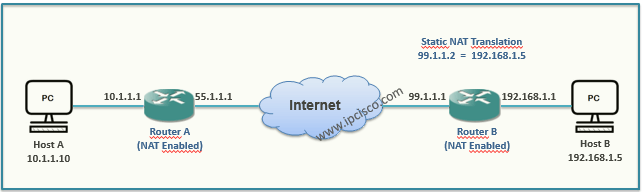
The increase of the internet users has consumed IPv4 addresses rapidly. And to continue with these addresses various techniques have used by organizations. One of them is Network Address Translation(NAT).
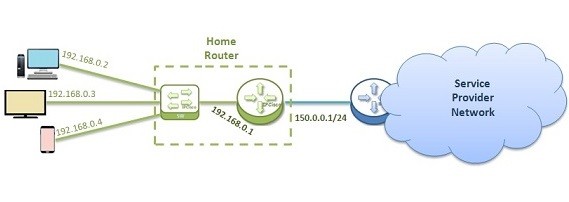
As you know there are public and private addresses. The public addresses are used to reach to the internet, because they can be routed on internet. But the private addresses are used within an organization only, because they can not be routed.
With NAT, we can use private address millions of times all over the world and still can be access to the internet. Here, NAT provide the translation from private address to the publica address.We are connecting internet with our private address, bur in real at the backplane it is doing this with a public address.
Private to public address translation is not the only way that NAT is used. NAT is also used for public to puclic or private to private translations. But the first one is most common.
For securtiy reasons, NAT also provide hiding your network from the outside of the world. Because the remote node that you connect by internet, only knows your public address, not the real internal address of your pc.
There are types of NAT.These are:
• Static NAT
• Dynamic NAT
• PAT(Port Address Translation) or NAT Overload
You can reach the other NAT articles below:
Network Address Translation (NAT) – Part 1
Network Address Translation (NAT) – Part 2 (Static NAT Configuration)
Network Address Translation (NAT) – Part 3 (Dynamic NAT Configuration)
Network Address Translation (NAT) – Part 4 (Port Address Translation)

Gokhan Kosem is a Network Engineer, Instructor and the Founder of IPCisco.com with 15+ years of experience in Cisco, Nokia, Huawei, Juniper, Linux, Service Provider Networks, Routing and Switching technologies.
He has worked on the backbone networks of major service providers and network vendors including Nortel, Alcatel-Lucent (Nokia) and has extensive hands-on experience with Cisco, Huawei, Juniper and Nokia networking technologies.
He has trained thousands of networking students worldwide through IPCisco.com, Udemy, books, labs, quizzes, and educational content across multiple social media platforms.
IPCisco.com | Best Route to Your Dreams





Leave a Reply