
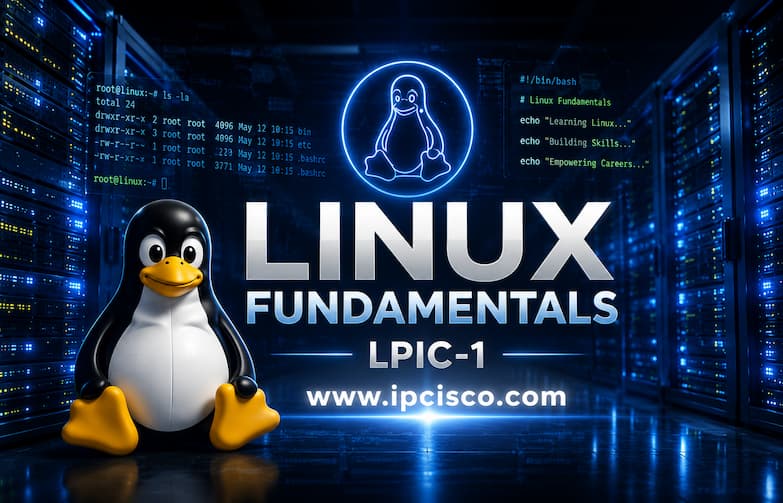

Linux Fundamentals Course is a practical beginner-friendly Linux training designed for system administration and linux for network engineers. In this course, you will learn Linux basics, Linux Commands, Linux networking tools and essential Linux administration topics step by step with hands-on examples. Here, we will cover LPIC-1 Topics.
Why You Should Learn Linux?
Linux is one of the most important operating systems used in system administration, networking, cloud computing and cybersecurity. Today, many servers, enterprise networks, security platforms, and cloud infrastructures run on Linux. By learning Linux fundamentals, you can improve your IT skills, work more efficiently with servers and network devices, and build a strong foundation for networking and cybersecurity careers. This Linux Fundamentals Course is designed for beginner sysrtem administrators, junior linux engineers, network engineers, IT students and cybersecurity professionals who want practical Linux skills.
Linux for System Administration
Linux is one of the most popular operating systems for server management and system administration. Linux administrators manage users, permissions, services, software packages, processes and server security on Linux systems. Learning Linux system administration skills can help you manage servers confidently, automate tasks, and work with enterprise Linux environments more effectively. In this LPIC-1 Course, we will cover all the required basic Linux lessons for system administration.
Linux in Networking
Linux is widely used in networking environments, data centers, enterprise infrastructures and cloud platforms. Network engineers often use Linux systems for SSH access, network troubleshooting, DNS management, routing, automation, and monitoring tasks. Learning Linux networking tools and Linux command line skills can help you manage networks more efficiently and improve your troubleshooting abilities in real-world IT environments.
Linux in Cybersecurity
Linux plays a critical role in cybersecurity and ethical hacking. Many cybersecurity tools, penetration testing platforms and security monitoring systems are based on Linux. Popular distributions like Kali Linux are commonly used for network scanning, vulnerability analysis, and security testing. By learning Linux fundamentals, you can build a strong foundation for cybersecurity, ethical hacking and penetration testing careers. In this course, we will cover general Linux topics, Linux fundamentals. If you would like to Learn Kali Linux you can check our Full Kali Linux Course.
Linux Skills You Will Gain
With this Linux Fundamentals Course, you will gain practical Linux skills that are widely used in system administratio, networking, cybersecurity and cloud computing. You will learn how to work with the Linux command line, manage Linux systems, troubleshoot network problems and use important Linux tools in real-world IT environments.
Linux Command Line Skills
The Linux command line is one of the most important skills for system administrators and Information Technology professionals. It is also improtant for network engineers who use Linux for various purposes. In this course, you will learn essential Linux commands for a system administrator like file and directory management, permissions, package management, SSH access and terminal usage step by step with practical examples. You will learn basics of Linux required for your system administration and network engineering operations.
Linux Networking Fundamentals
Linux is commonly used in enterprise networking and server environments. In this Linux course, you will learn important Linux networking fundamentals such as IP configuration, network troubleshooting, SSH connectivity, DNS tools, ping, traceroute and other Linux networking commands used by network engineers and IT professionals.
Linux Troubleshooting Basics
Troubleshooting is an important part of Linux system administration and networking. In this course, you will learn how to troubleshoot Linux systems, check services and processes, analyze logs, test network connectivity and solve common Linux and networking issues using practical Linux troubleshooting tools.
Who Should Take This Linux Course?
This Linux Fundamentals Course is designed for beginners, Linux system administrators, network engineers, IT professionals and cybersecurity students who want to build practical Linux skills. Whether you want to learn Linux for server administration, networking, cybersecurity and cloud computing, this course provides a strong foundation with hands-on Linux training and real-world examples.
The course also covers many Linux Essentials and LPIC-1 related topics that can help students prepare for popular Linux certification exams such as Linux Essentials, LPIC-1 and CompTIA Linux+.
Frequently Asked Questions
Do I Need Prior Linux Experience?
No. This Linux Fundamentals Course is designed for beginners and does not require prior Linux experience. You will learn Linux basics step by step with practical examples and hands-on lessons.
Is This Course Beginner Friendly?
Yes. The course is beginner friendly and focuses on practical Linux fundamentals including Linux commands, networking tools, SSH, permissions, package management, and basic Linux administration.
Does This Course Help with LPIC-1 and Linux Essentials?
Yes. This course covers many Linux Essentials and LPIC-1 related topics including Linux command line skills, file management, permissions, networking basics and Linux administration fundamentals.