- COURSES
- SPECIALS
- BLOG
- MEMBERS
- SHOP
- BOOKSHELF
- ABOUT
- ENROLL HERE

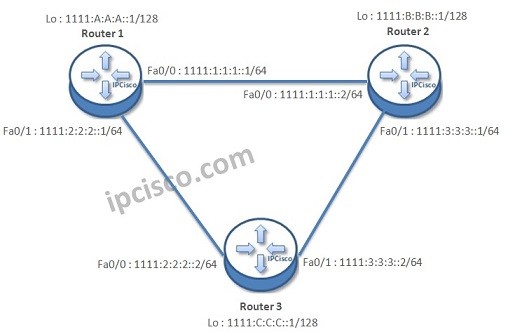
Table of Contents
The configuration of RIPng is a little different from its predecessor, RIPv2. First of all, RIPng is IPv6 avare routing protocol and before RIPng Cisco configuration, IPv6 must be configured in your system.
In this article, we will configure RIPng Cisco according to the below topology.
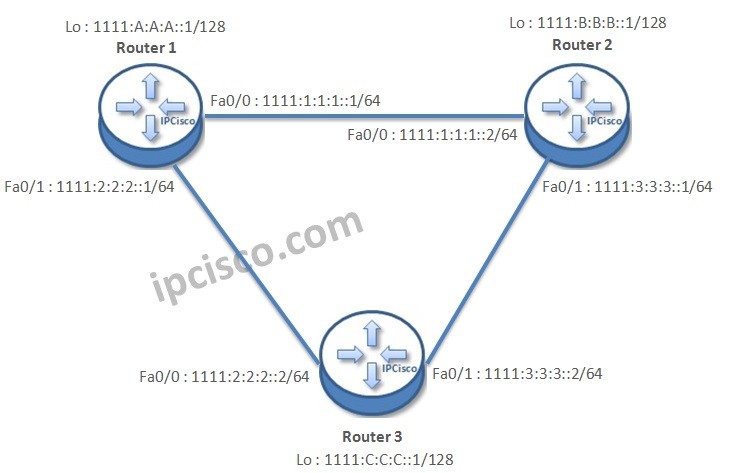
Here, for Cisco RIPng configuration there are two steps. These steps are:
1) Enabling CEF, IPv6 and RIPng globally,
2) Enabling RIPng for the specific interface.
Firstly we will enable CEF with “ip cef” command and again we will enable IPv6 routing with “ipv6 unicast-routing” command. After this we need to create RIPng with a name by “ipv6 router rip ripname” command.
After these, the second step is enabling the interfaces for RIPng. In RIPv2, networks are become RIP available via network command. But in RIPng, the configuration is done via interfaces not networks.

Gokhan Kosem is a Network Engineer, Instructor and the Founder of IPCisco.com with 15+ years of experience in Cisco, Nokia, Huawei, Juniper, Linux, Service Provider Networks, Routing and Switching technologies.
He has worked on the backbone networks of major service providers and network vendors including Nortel, Alcatel-Lucent (Nokia) and has extensive hands-on experience with Cisco, Huawei, Juniper and Nokia networking technologies.
He has trained thousands of networking students worldwide through IPCisco.com, Udemy, books, labs, quizzes, and educational content across multiple social media platforms.
IPCisco.com | Best Route to Your Dreams