
- COURSES
- SPECIALS
- BLOG
- MEMBERS
- SHOP
- BOOKSHELF
- ABOUT
- ENROLL HERE

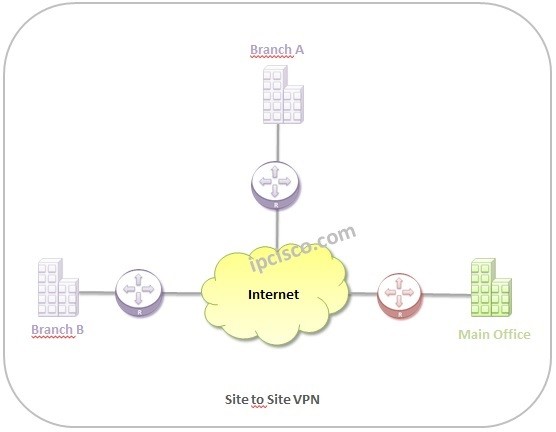
Table of Contents
VPN (Virtual Private Network) is a technology that provides a secure connection to a private network over the Internet for users. By encrypting connections, VPN provides security in this type of communication. Basically, this security is provided through a VPN tunnel and provides a trusted connection by preventing hacker attacks. Different VPN types and Protocols of VPN provide various secure connections.
There are two main VPN Types. These VPN Types are:
In this lesson, we will learn the types of VPN in detail. Let’s start.
Remote Access VPN is the first of the two VPN types. Remote Access VPN is the VPN type with which, users can access the private networks over the Internet remotely.
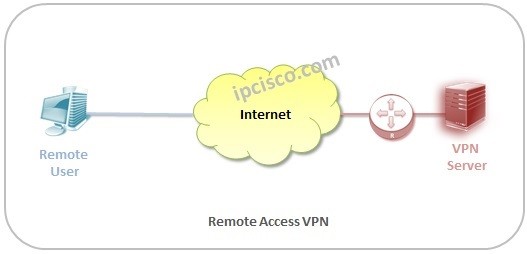
This type of VPN, provides network access to remote users, traveling employees, workers far away from their company. Remote Access VPN is usually used in corporate networks. With Remote Access VPN, users can use their enterprise network’s resources as they are connected directly to their network.
Besides corporate usage, this type of VPN is also used in home networks. Users at home can use Remote Access VPN to connect to the Internet. By doing this, home users can avoid regional restrictions like website blocking. In addition, they use it for better security during their Internet connection.
Site-to-Site VPN is the VPN type used between different company locations. With this VPN type, company sites in geographically different places are securely connected over the Internet.
There are two different Site-to-Site VPN types:
In an Intranet-Based VPN, the branches of a company are connected over the Internet as if they are in the same network. In this case, there is only one company and no external connection.
In an Extranet-Based VPN, different companies are connected over the Internet. As the name implies, each company is connected to external companies.
There are different VPN protocols. These protocols provide different types of security.
These protocols are:
One of the most important VPN protocols is IPSec. IPSec for VPN provides secure connections over IP networks using authentication and encryption.
There are two IPSec modes: Transport Mode and Tunnel Mode. In transport mode, only the payload of the packet is encrypted. In tunnel mode, the entire packet is encrypted.
IPSec is a little difficult to implement and can be an expensive solution compared to other VPN solutions.
In IPSec Lesson, you can learn this protocol detailly.
Layer 2 Tunneling Protocol (L2TP) is another VPN protocol widely used in the networking world. Initially, it had many vulnerabilities, but later it began to be used together with IPSec. IPSec provides additional security to L2TP. In this combination, the tunnel is created by L2TP and encryption is provided by IPSec.
PPTP is a widely used tunneling protocol that uses Point-to-Point Protocol (PPP) to encrypt data through the tunnel. PPTP is faster than many other tunneling protocols. However, it has known vulnerabilities. Over time, as network attacks increased, these VPN vulnerabilities became significant security risks. Therefore, although PPTP is widely used VPN protocol, it is not as secure as other tunneling protocols.
SSTP (Secure Socket Tunneling Protocol) is a VPN solution developed by Microsoft and built into Windows. It is similar to OpenVPN, but unlike OpenVPN, it is mainly used on Windows systems. Therefore, it is not widely preferred VPN protocol.
Since it is developed for Windows, it is not widely used on Linux and is not supported on macOS.
The security of SSTP (Secure Socket Tunneling Protocol) is comparable to OpenVPN, but it requires trusting the Windows platform.
Internet Key Exchange version 2 (IKEv2) was developed by Cisco and Microsoft. It is not a standalone VPN protocol but is used together with IPSec, especially for mobile devices.
IKEv2 is fast and secure. It uses strong encryption mechanisms such as AES and IPSec.
SSL and TLS together provide a strong VPN solution, especially for web-based applications like e-commerce websites. SSL and TLS operate over web browsers, where the browser itself acts as a VPN client.
This type of VPN is not typically used by home users. It is mainly used by websites to provide secure services, such as online shopping. With SSL and TLS VPN solution, websites provide secure shopping service to the customers.
OpenVPN is an open-source VPN protocol that uses SSL/TLS for encryption. It is a highly secure protocol that supports many encryption algorithms.
OpenVPN is not natively supported by operating systems, so it requires third-party software to use.
OpenVPN is not as fast as PPTP but offers a good balance between speed and security, similar to L2TP. It can also be configured easily using third-party applications.
SSH (Secure Shell) is another method that can be used for VPN-like secure communication. With SSH, a secure connection is established between a client and a server, and data is transferred through an encrypted tunnel.
SSH (Secure Shell) works using a client-server model. The client initiates a secure connection and public key cryptography is used between the two endpoints.
MPLS VPN is a VPN solution commonly used by service providers. It is one of the most widely used VPN types in large-scale networks. However, MPLS VPN is complex and expensive, making it unsuitable for home users.
There are two main types of MPLS VPNs. These MPLS VPNs are:
Layer 2 VPNs include:
Layer 3 VPNs are also knowns as VPRN.
According to the used technology, there are also different types of Pseudowires (VPWS).
MPLS VPNs has explained detailly in another lessons. You can check MPLS VPN lessons to learn more about them.
Hybrid VPN is a VPN type that combines multiple VPN technologies. For example, MPLS and IPSec VPNs can be used together within a Hybrid VPN.
Although this approach can be expensive, it helps overcome the disadvantages of one protocol by leveraging the advantages of another.
A VPN’s primary goal is security. It encrypts data traveling over the Internet, making it unreadable to attackers. This ensures confidentiality, integrity, and privacy when accessing networks remotely or browsing online.
Remote Access VPN is used by individual users to connect to a company network. Employees working from home can be a good example for this type of VPN.
Site-to-Site VPN, on the other hand, connects entire networks together securely over the Internet. The connectiojn between brach offices of a company can be an example of this type of VPN.
IPSec secures VPN communication by verifying the identity of devices (authentication) and protecting data with encryption. It ensures that data is not altered or accessed by unauthorized users during transmission.

Gokhan Kosem is a Network Engineer, Instructor and the Founder of IPCisco.com with 15+ years of experience in Cisco, Nokia, Huawei, Juniper, Linux, Service Provider Networks, Routing and Switching technologies.
He has worked on the backbone networks of major service providers and network vendors including Nortel, Alcatel-Lucent (Nokia) and has extensive hands-on experience with Cisco, Huawei, Juniper and Nokia networking technologies.
He has trained thousands of networking students worldwide through IPCisco.com, Udemy, books, labs, quizzes, and educational content across multiple social media platforms.
IPCisco.com | Best Route to Your Dreams







there are some many typing errors
Thank you for this correction Peter. We wll check it. Good luck!