
- COURSES
- SPECIALS
- BLOG
- MEMBERS
- SHOP
- ABOUT
- ENROLL HERE

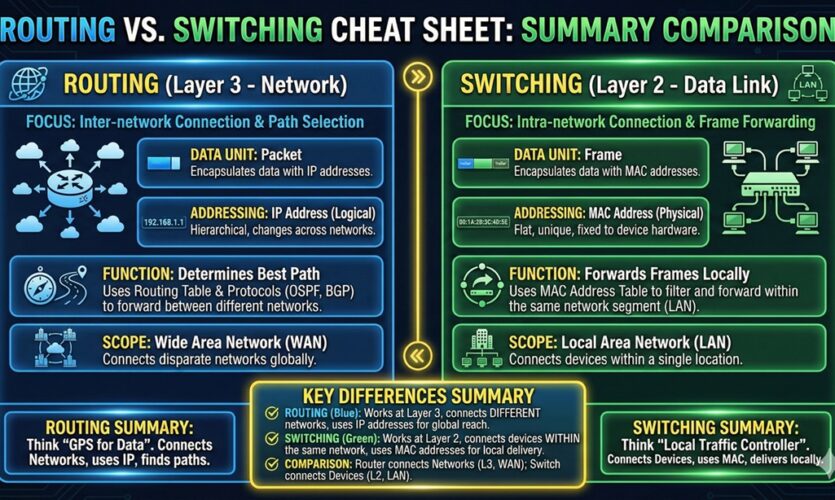
This question is one of the most asked entrance level network questions. Here, we will answer what is routing, what is switching and what is the key differences between routing and switching. It is also very important to udnerstand the basics of this quesion for CCNA Level Certifications.
Table of Contents
Routing is a network process which means that data forwarding between different networks according to the layer 3 network addresses, ip addresses. Routing is mainly done by routers which are also a layer 3 devices of OSI Reference Model. With routing process, the communication between different networks is enabled. For example, your local area network is a small network and you would like to connect Internet which is a larger network. Or you want to send data to another network on Internet. To provide this, your router must route you to the correct way towards your destination network. This process is done on routers through the destination.
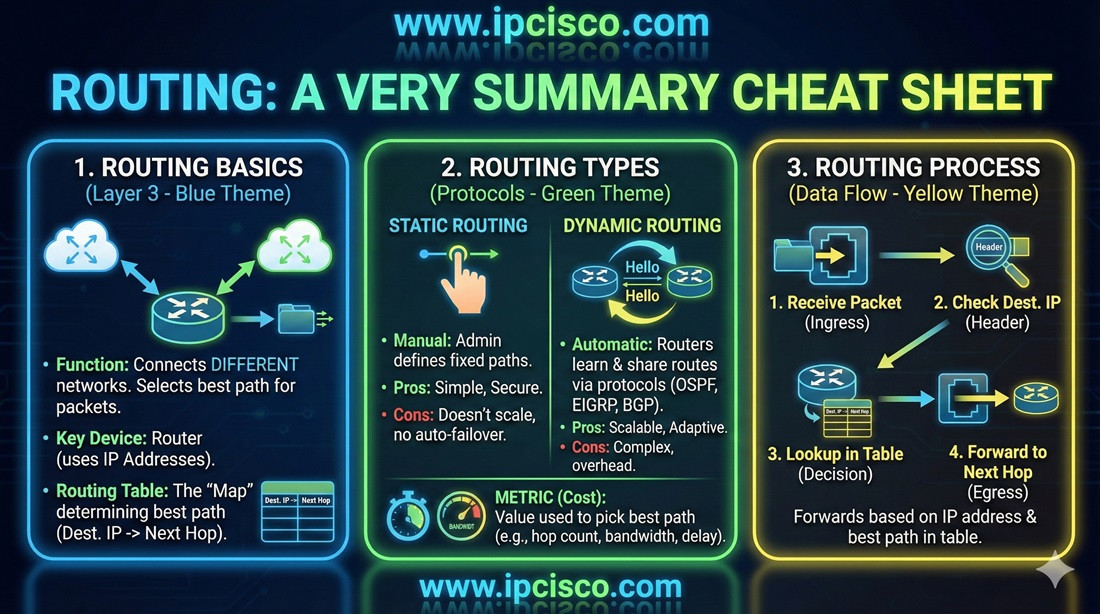
For routing process, routers need to know the way through the destination. To have this information, there must be static routes or dynamic routing protocols enabled on the routers. In other words, a manual static route configuration or routing protocols needed on the router. After this configuration, router does some route calculations to determine the best route to the destination. This is done to select the most effective route to the destination.
Access All Network Quizes and CCNA Flash Card Questions!
Switching is a network process with which data packets are forwarded based on layer 2 addresses, MAC addresses. Switching is an OSI Model layer 2 process. If we compare routing and switching basically, routing is the process between different networks. Switching is the process within a network. There is no forwarding to another network in switching process. Layer 2 switches are the devices that is used for switching process. Multilayer switches are also used for this purpose beside routing process.
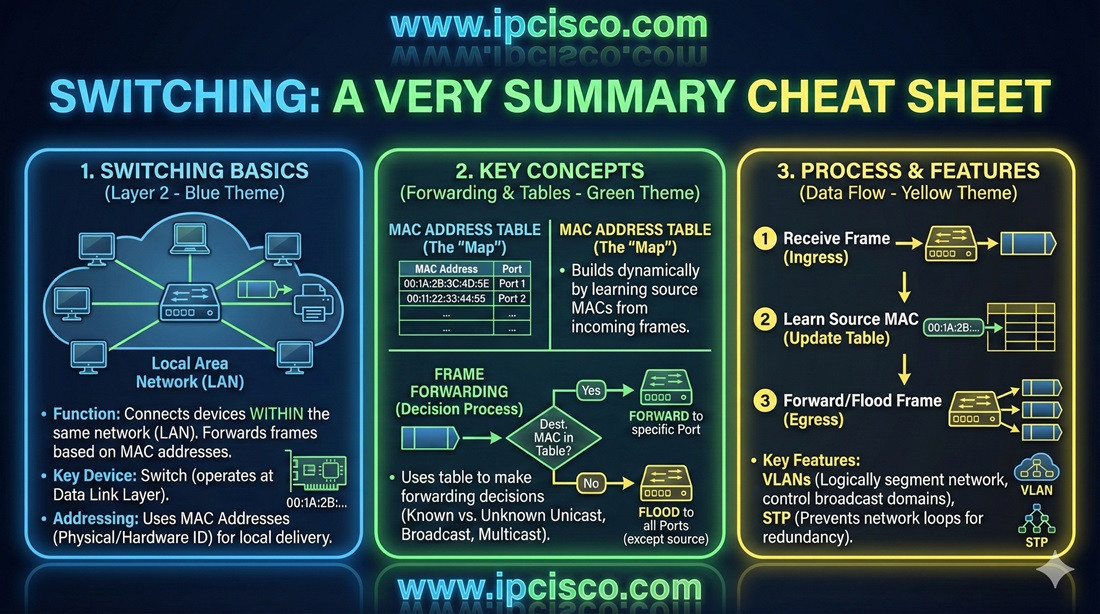
For switching process, switches use MAC tables. In this MAC tables, interface names (port names), MAC addresses and VLAN information is stored. According to this information, switching process is done.
The main difference between routing and switching is the OSI layer of the process. Routing is a layer 3 process and switching is a layer 2 process. In other words, routing operates at layer 3 (network layer) of OSI model. Switching operates at layer 2 (data-link layer) of OSI model.
Another difference is about used address type. Switching uses layer 2 addresses or physical addresses. The name of this address is MAC address. MAC address is the address type that is given by the manufacturer of the device. They are not changed after that.
Switching uses frames as data unit while routing uses packets as data unit.
The other difference between routing and switching is about their functions. Routing connects different networks for example it connects your LAN to WAN. On the other hand, switching connects devices within the same network. It is a way of efficient forwarding.
About speed, switching is faster process than routing process. It is a local process and it needs only MAC table for the process. This makes switching, smart and faster. On the other hand, router need more process because of routing calculations and route decisions. It uses complex algorithms especially with routing protocols to determine the best paths. This makes routing, slower than switching.
Access All Network Quizes and CCNA Flash Card Questions!
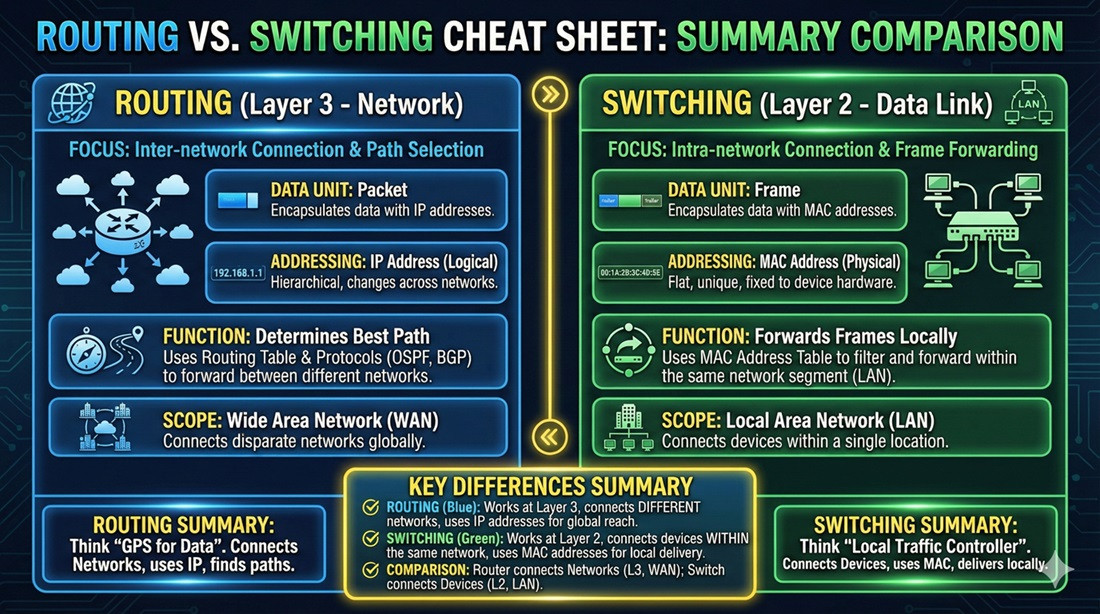
The main difference between routing and switching is, routing connects different networks while switching connects devices within the same network.
Routing operates at Layer 3 of OSI model while Switching operates at Layer 2 of OSI Reference model.
Switches are responsible for switching in computer networks.
Routers are responsible for routing in computer networks.





Leave a Reply