
- COURSES
- SPECIALS
- BLOG
- MEMBERS
- SHOP
- BOOKSHELF
- ABOUT
- ENROLL HERE

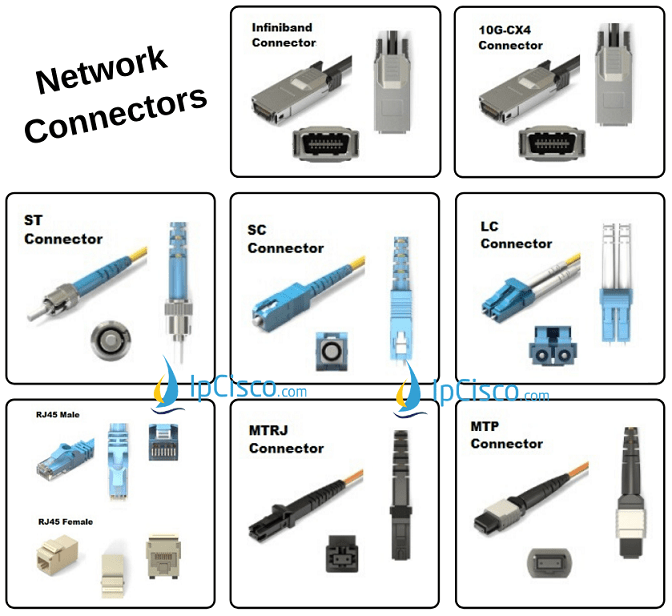
In Network Cabling, beside cables, there are also Network Cable Connectors. There are different types of networking connectors are used for different purposes in network World. Here, we will see the common connectors of networking. Now, let’s focus each of these Network connectors.
Network Connector Types
Table of Contents
RJ45 (Registered Jack 45) is one of the most used networking connector in network world. RJ45 is a connector maden by plastic and it is larger than a classical telephone connector, RJ11. RJ45 is the connector of UTP and STP type cables. It is located at the two side of the cables (CAT-5, CAT-6 etc) and with this connectors we can connect the cable between any two network devices, to routers, to switches, firewalls etc. Here, RJ45 is the point that we terminate a cable. This process is called as “termination” in network terminology. With this way, these two network devices are connected. This process is done with the help of RJ-45 Crimping tool.
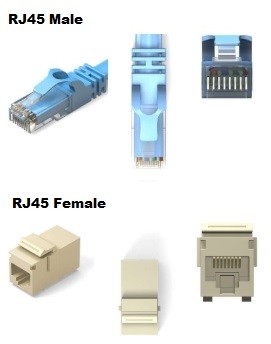
RJ45 Connector | Male & Female
For RJ45 pinouts, T568A/T568B wiring, connector types and crimping, check our complete RJ45 Connector lesson.
BNC (Bayone-Neill-Concelman) Connector is one of the most used Coaxial Cable Connectors. This BNC Connectors are use with different types of adapters. T-connector, Barrel Connector, Terminator etc.
You can find some of the coaxial connector types below:
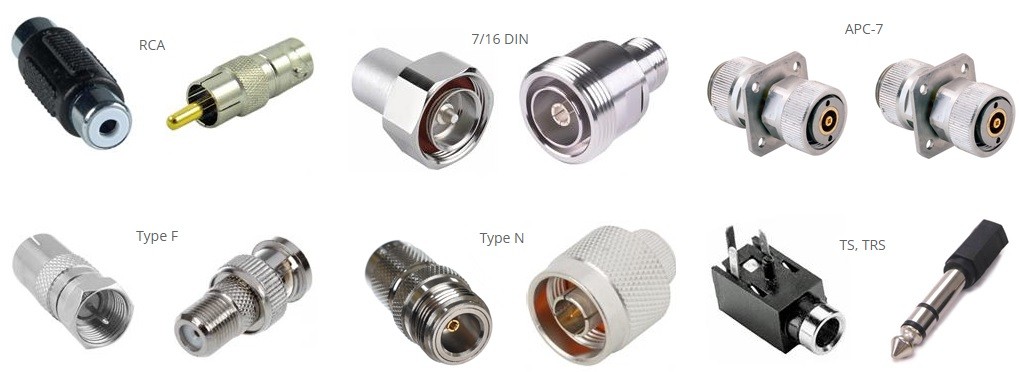
Coaxial Connector Types
Fiber Optic Cables are one of the most used cables in network World. With the need of high speeds, this types of cables usage increased and different types of fiber connectors has developed. The design of these fiber optic cables are similar. But there are some different connector types
There are four common elements of a fiber optic connector. These elements are :
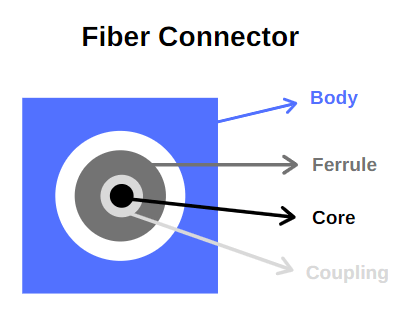
Fiber Optic Cable Parts
The Ferrule is the structure that covers the fiber.
The Body is the cover that protects the fiber.
The Coupling is the cover that prevents signals in the core from escaping.
The Core is the exact conduit part of the fiber that light passes through.
According to the connector number at the end there are mainly two types fiber optic connectors. These are :
If there is a one connector at the fiber end, it is called Simplex End.
If there are two connectors ath the fiber end, it is called Duplex End.
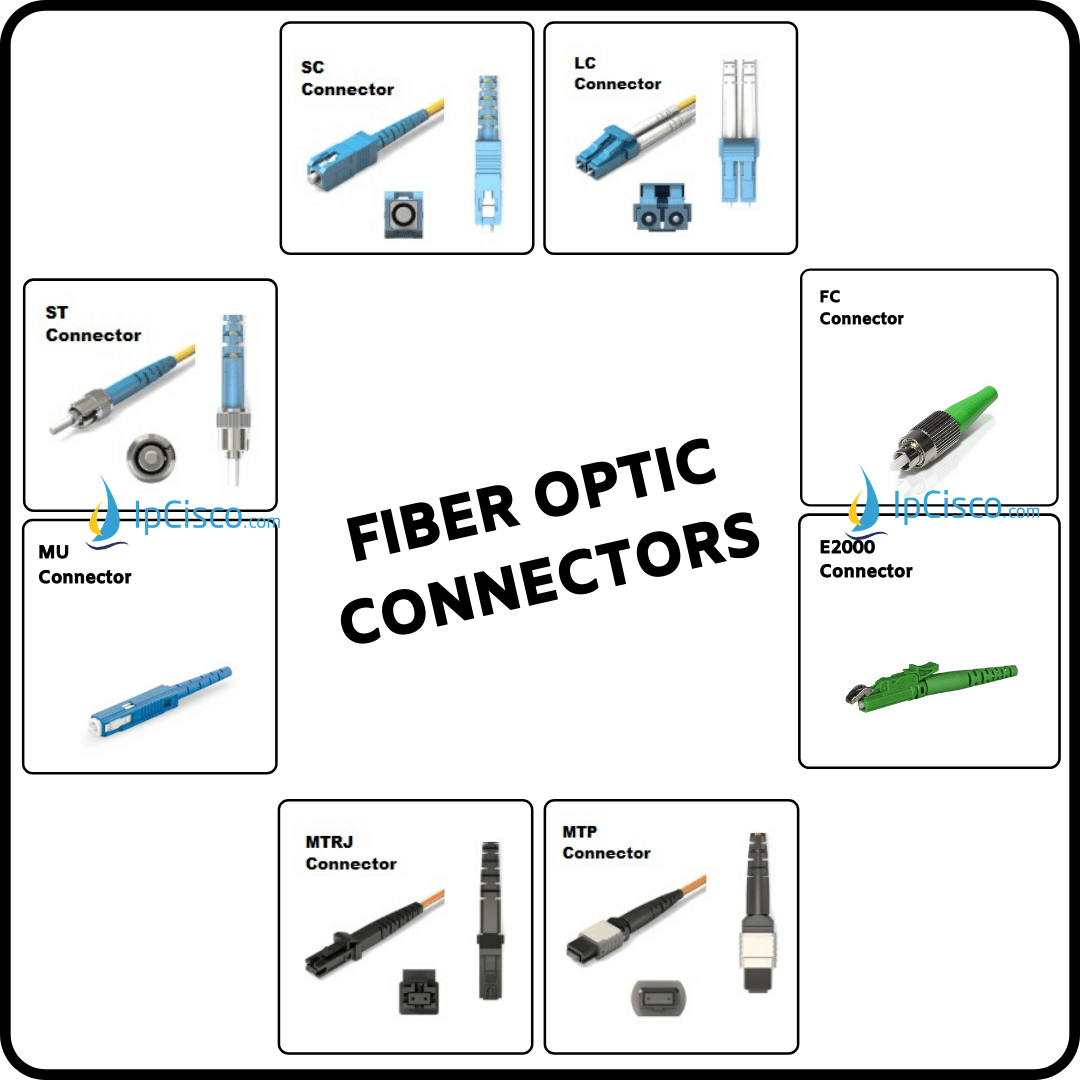
Optical Cables can be used with different types of connectors. The most used optical cable connectors are LC, SC and ST connector. With this connectors optical cables are plugged to the optical ports in the network devices. The most common Fiber Optic Networking Connectors are given below:

There is also Multi Fiber networking connector type, MTP/MPO (Multi-Fiber Push On). This type of connector is used for higher bandwidths and higher density.
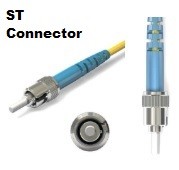
ST (Straight Tip Connector) is the first connector type used for fiber optic termination at the end of multi mode cables. It is developed by AT&T. ST Connector is used with twist on/off mechanism. It is rerely used in todays network World. Instead of ST Connector, LC and MTP Multi Fiber Connectors are used.
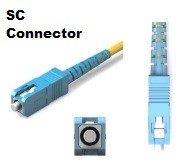
SC (Subscriber Connector) is used on MMF or SMF. It is developed by Japon NTT . The mechanism used with SC Connector is push on/off mechanism. It is rerely used in todays network World. Instead of SC Connector, LC and MTP Multi Fiber networking connectors are used.
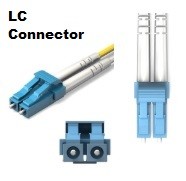
LC (Lucent Connector) is a widely used SFF (Small Form Factor) networking connector used for high-density connections. LC Connector is consist of two fibers connected together at the same time and it is always duplex. It is developed by Lucent Technologies.
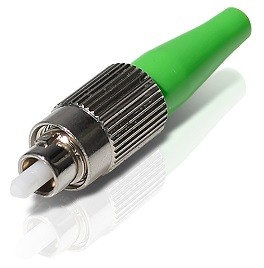
FC is an old popular connector type especially for single mode. FC Connectors use 2.5mm ferrule.
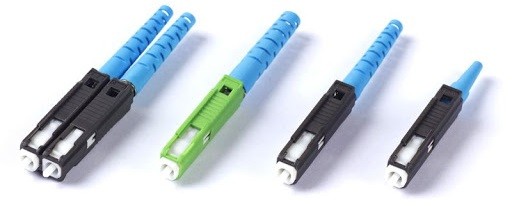
MU connector is used for dense applications. They are mainly used for SDH, SONET, ATM, CATV, WDM Technologies.
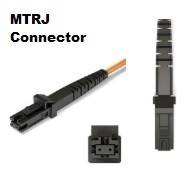
MTRJ Connector is a widely used SFF (Small Form Factor) network connector. It is developed by AMP/Tyco and Corning. This type of connectors in networking is used always with two fiber cables.
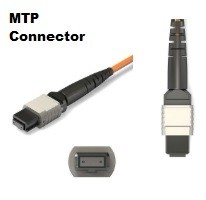
MTP (Multi-fiber Termination Push-on) is the enhanced version of MPO (Multi-Fiber Push On). MPO (Multi-Fiber Push On) was developed by NTT, while the improved version is produced by US Conec. This connectors in networking are designed to terminate several fibers up to 12 or 24 fiber optic cables.
Fiber Optic Connectors
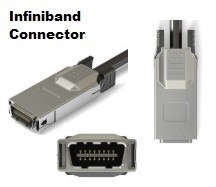
Infiniband is the cable technology that is used in datacenters for high performance. This type of cables uses MicroGigaCN connectors. 4x Connector is one of the connector types used in this category. This types of networking connectors support four aggregated links.
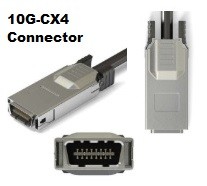
10G-CX4 is the first copper cable technology for 10G with low cost and low latency. The connector used by 10G-CX4 is similar to Infiniband. Again it has 4 lines and the distance fort his type of cable is up to 15 meters.
In the below table, you can compare the most common network connectors, including RJ45, BNC, LC, SC, ST, FC, MT-RJ and MPO/MTP. This network connector comparison table below summarizes their cable type, common applications, locking mechanisms and usage in modern networking.
| Connector | Cable Type | Typical Use | Locking Mechanism | Simplex / Duplex | Ferrule Size |
| RJ45 | Twisted Pair Copper | Ethernet LAN, Data, VoIP | Clip (Tab) | N/A | N/A |
| BNC | Coaxial | CCTV, Legacy Ethernet, Test Equipment | Bayonet | N/A | N/A |
| LC | Fiber Optic | Data Centers, SFP Modules | Latch | Simplex / Duplex | 1.25 mm |
| SC | Fiber Optic | Telecom, FTTH, Data Networks | Push-Pull | Simplex / Duplex | 2.5 mm |
| ST | Fiber Optic | Legacy and Industrial Networks | Twist Lock | Simplex | 2.5 mm |
| FC | Fiber Optic | Telecom, Test Equipment | Threaded | Simplex | 2.5 mm |
| MT-RJ | Fiber Optic | Legacy Duplex Fiber Connections | Clip | Duplex | 1.25 mm |
| MPO/MTP | Multi-Fiber Optic | High-Speed Data Centers | Push-On | Multi-Fiber | Varies |
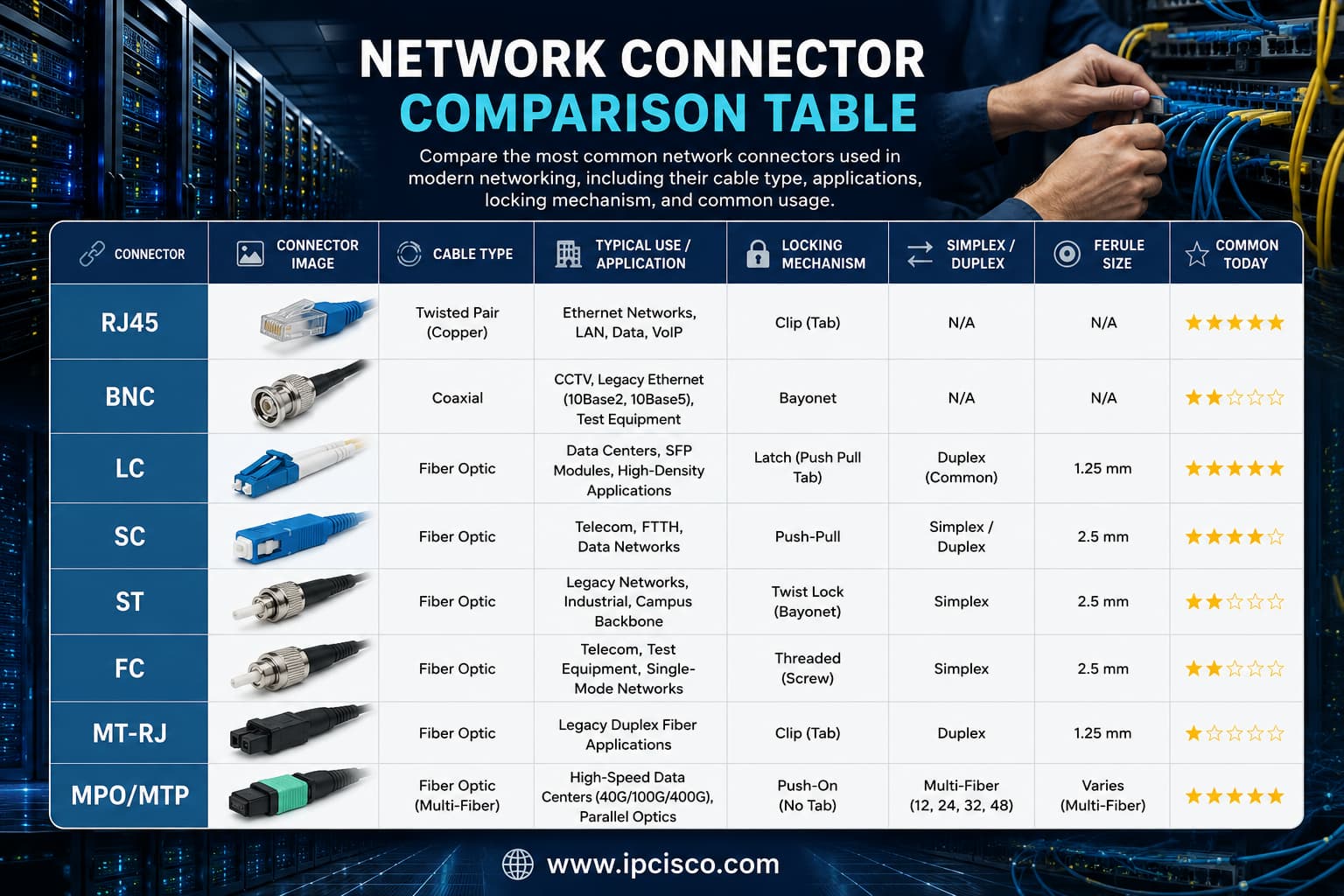
Comparison of the most common copper, coaxial and fiber-optic network connectors used in modern networking
Not sure which connector to choose? Use the comparison table below to quickly identify the most suitable network connector based on your networking environment, cable type and application.
| If You Need… | Recommended Connector | Why It is The Best Choice? | Example Applications |
| Home or Small Office Ethernet Connection | RJ45 | Widely compatible, affordable, and easy to install. | Home networks, IP phones, routers, laptops |
| Standard Office or Enterprise LAN | RJ45 | Industry standard for Cat5e, Cat6, and Cat6A Ethernet networks. | Office LANs, switches, patch panels |
| SFP or SFP+ Modules | LC | Small form factor and ideal for high-speed optical modules. | Fiber switches, routers, SFP transceivers |
| FTTH or Telecom Installations | SC | Widely used in telecom and fiber distribution systems. | FTTH, fiber patch panels, telecom cabinets |
| High-Density Data Center Connections | MPO/MTP | Supports multiple fibers in one connector. | 40G, 100G, and 400G data center links |
| Legacy Fiber or Industrial Networks | ST | Common in older and industrial installations. | Campus backbones, industrial networks |
| Long-Distance Single-Mode Telecom Networks | FC | Threaded design provides a secure connection. | Telecom networks, test equipment, long-haul links |
| CCTV or Legacy Coaxial Systems | BNC | Commonly used with coaxial cables and video systems. | CCTV, legacy Ethernet, test equipment |
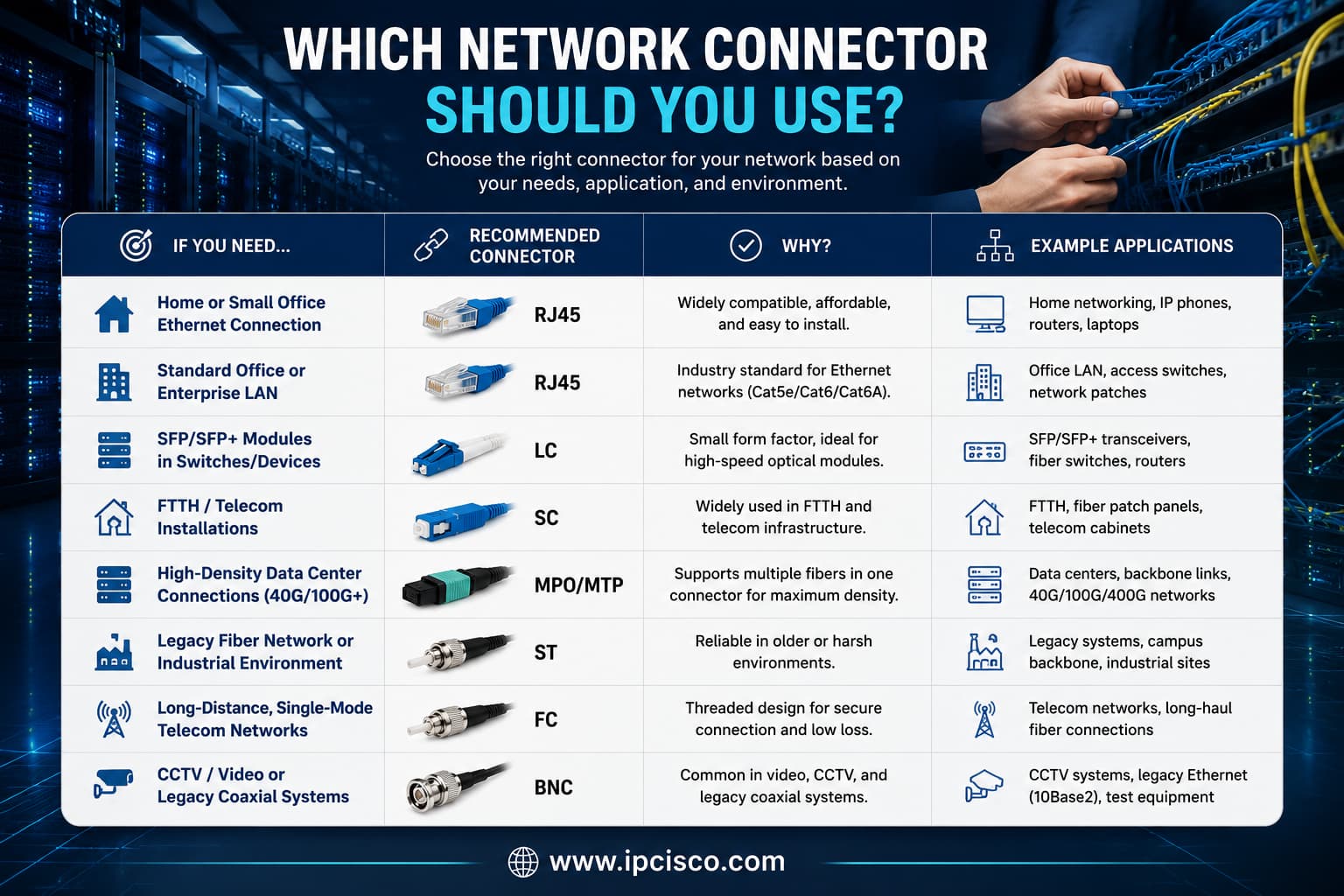
Quick guide to choosing the right network connector based on your networking application and environment
Use below quick reference Network Connectors Cheat Sheet guide to review the most common copper, coaxial and fiber-optic network connectors. It summarizes connector types, typical applications, locking mechanisms, ferrule sizes and other key characteristics.
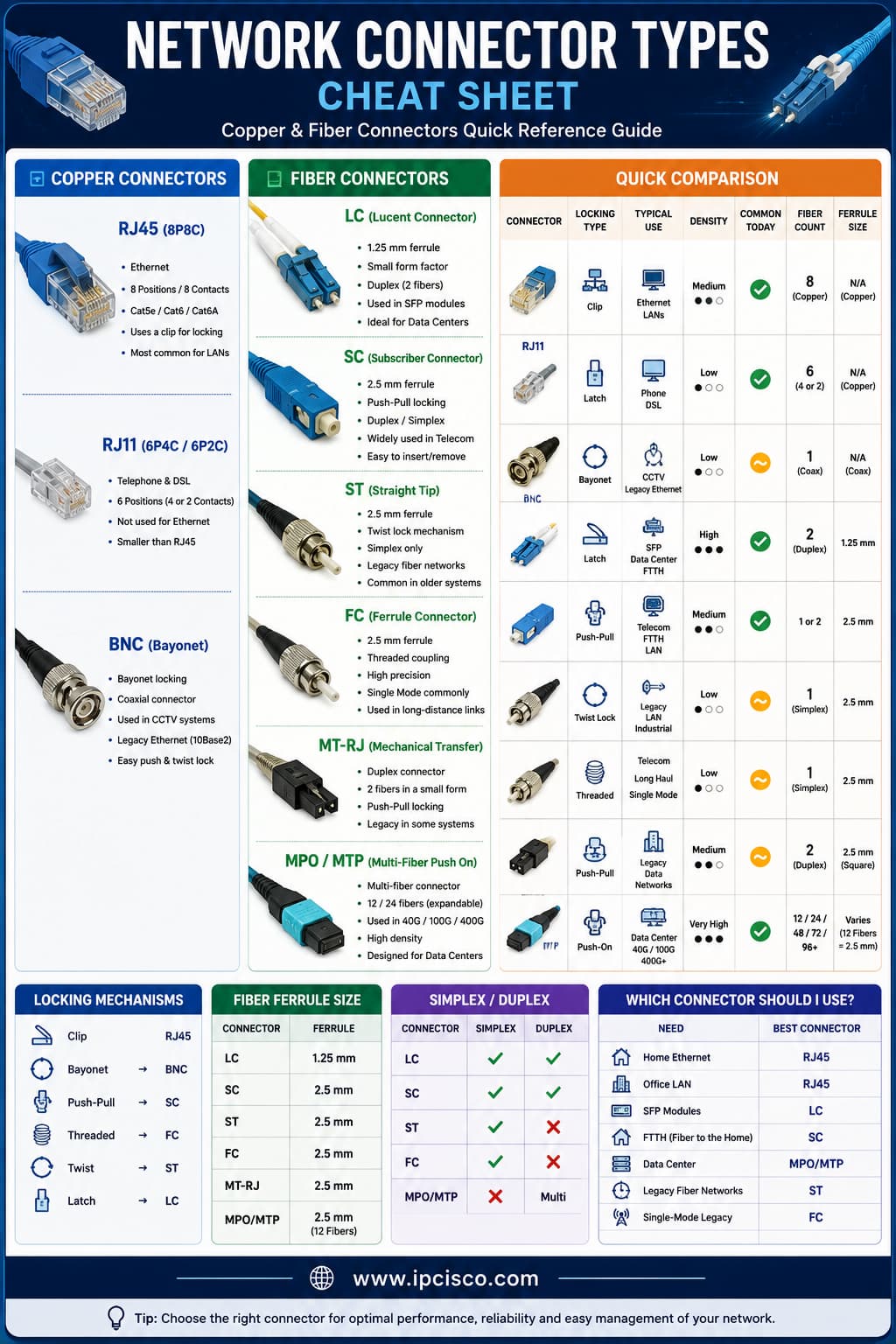
Quick reference guide to the most common network connectors, including copper, coaxial, and fiber-optic connector types used in modern computer networks.
Small Form Factor (SFF)Connectors are developed to reduce fiber connections. This is done to use the limited rack space effectively in the datacenters. Small Form Factor Connectors(SFF) are deveoped as a standard for this. LC and MTRJ Connectors are types of SFF Connectors.
Ferrule is a cylindrical structure that the fiber resides in. This structure is made from metal, ceramic and plastic.
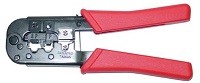
To produce a cable with RJ45 connector, we should use a tool that we will crimmp the connector. This network tool is RJ-45 Crimping tool and it is widely used by network technicians.
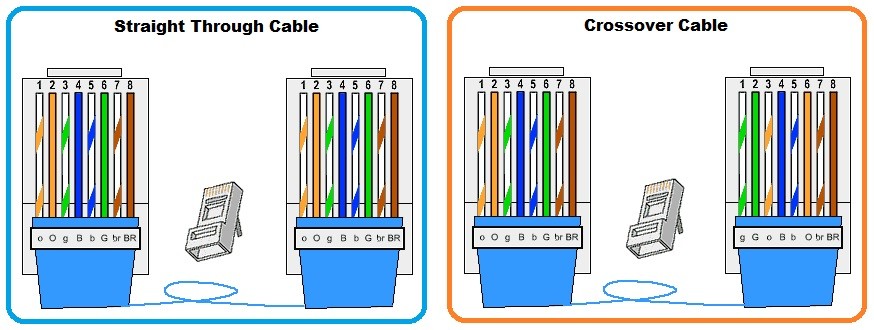
To make an ethernet cable, firstly cut the cable that is enough long for your requirement. Then cut the plastic sheat almost 1 inch and then order the wires according to the colors below. After that cut the wires a little again. Now, you can put the wires to the little holes of RJ45 network connector. Lastly, you should use RJ45 crimping tool to crimp the cable end. For the other end, you will also do the same steps. At the end, you can test your cable with Ethernet cable tester.
Network connectors are the components used to terminate cables and connect computers, switches, routers, patch panels, transceivers and other network devices. Well-known examples for network connectors are RJ45 connectors for twisted-pair Ethernet, BNC connectors for coaxial cables and LC, SC, ST and MPO/MTP connectors for fiber-optic cables.
The main categories for network connectors are copper, fiber-optic and coaxial connectors. RJ45 is the most common copper Ethernet connector, BNC is widely associated with coaxial cabling and LC, SC, ST, FC, and MPO/MTP are common fiber-optic connector types.
The RJ45 connector is the most commonly used connector for copper Ethernet networks. RJ46 is typically used with Cat5e, Cat6, Cat6a and other twisted-pair cables. It connects devices such as computers, switches, routers, wireless access points and patch panels.
RJ45 is the standard connector used for twisted-pair Ethernet. Fiber Ethernet connections commonly use LC, SC, or MPO/MTP connectors together with optical transceivers. On the other hand, older coaxial Ethernet technologies used BNC connectors. They are rarely used in modern LANs.
RJ45 commonly refers to the eight-position modular connector used for Ethernet cabling. RJ45S is a specific keyed telephone wiring standard and is not the same as the standard 8P8C connector generally called RJ45 in Ethernet networking.
A network connector can be identified by its shape, size, locking mechanism, number of contacts or fibers and the cable type it supports. RJ45 has eight metal contacts and a plastic locking tab, LC is a small fiber connector with a latch, SC has a larger square push-pull body and ST uses a round bayonet-style connection.
Yes. Cat5e and Cat6 cables generally use RJ45-style 8P8C connectors. However, the connector should match the cable category and conductor size. Cat6 and Cat6a connectors may have different internal guides or larger openings to support thicker conductors and reduce crosstalk.
A network cable carries electrical or optical signals between devices, while a connector terminates the cable and provides the physical interface used to plug it into a port, patch panel, transceiver or another cable.

Gokhan Kosem is a Network Engineer, Instructor and the Founder of IPCisco.com with 15+ years of experience in Cisco, Nokia, Huawei, Juniper, Linux, Service Provider Networks, Routing and Switching technologies.
He has worked on the backbone networks of major service providers and network vendors including Nortel, Alcatel-Lucent (Nokia) and has extensive hands-on experience with Cisco, Huawei, Juniper and Nokia networking technologies.
He has trained thousands of networking students worldwide through IPCisco.com, Udemy, books, labs, quizzes, and educational content across multiple social media platforms.
IPCisco.com | Best Route to Your Dreams







That is good
Thank you very much:)